The 3-3-3 Rule for Cats: A First-Time Cat Mom’s Guide to Patience

Bringing home a new cat is one of the sweetest and most emotional milestones of cat motherhood. You fluff the bed, set out the bowls, and imagine your new girl settling in beside you by bedtime.
Then reality hits: she hides under the bed, ignores the toy you bought, and looks at you like you’ve completely disrupted her life.
If that’s where you are right now, take a breath. You’re not doing anything wrong.
As a cat mom, I’ve learned that one of the biggest gifts we can give a new cat is patience. That’s exactly why the 3-3-3 rule for cats is so helpful. It gives us a realistic, compassionate framework for understanding what many adopted cats go through in the first 3 days, 3 weeks, and 3 months after coming home. This guide will walk you through each stage, what your cat may be feeling, and how to support her with confidence. If you’re looking to keep your home fur-free while managing your cat’s comfort, be sure to check out our tips on how to stop cat hair from taking over your house. For busy cat moms considering ways to simplify litter box maintenance, our review on are automatic litter boxes worth it? can be a real lifesaver. And if you want to make your home a safer, smarter space for your curious kitty, don’t miss our practical advice on cat-proofing your kitchen.
What Is the 3-3-3 Rule for Cats?
The 3-3-3 rule is a simple guideline often used by rescues, shelters, and pet professionals to describe how a cat may adjust to a new home:
The 3 stages at a glance
- First 3 days: Your cat is decompressing
- First 3 weeks: Your cat is learning your routine and beginning to trust you
- First 3 months: Your cat is settling in and showing more of her true personality
Not every cat follows this timeline exactly. Some open up quickly, while others need more time. But for first-time cat moms, this rule can be incredibly reassuring. It reminds us that hiding, hesitation, and slow bonding are often completely normal.
The First 3 Days: The Decompression Phase
The first few days are all about helping your cat feel safe.
She’s in a brand-new environment with unfamiliar smells, sounds, and people. Even if your home is peaceful and loving, it can still feel overwhelming at first. Many cats respond by hiding, staying quiet, or avoiding interaction.
What your cat may do in the first 72 hours
- Hide under furniture
- Eat very little
- Avoid eye contact
- Stay very still and quiet
- Hiss or retreat if approached
This can be hard emotionally, especially if you were hoping for instant cuddles. But in my experience, this phase is less about affection and more about security.
What to do during the first 3 days

Create a quiet safe room
A small room can help your new cat settle in without the stress of navigating the entire house. Include:
- Litter box
- Food and water
- Bed
- Hiding spot
- Scratcher
- A simple toy
Keep your presence calm and low-pressure
Sit on the floor, talk softly, and let your cat observe you. You don’t need to force interaction. Quiet companionship goes a long way.
Watch the basics
It’s normal for a cat to eat less at first, but keep an eye on food intake, water, and litter box use. If something feels off for too long, check with your vet.
Product picks for the safe room setup

A cozy bed for a secure resting spot
A soft bed can help your cat feel more comfortable while she adjusts.
Why I recommend it as a cat mom:
When a cat is scared, comfort matters more than cuteness. I like this style of bed because it creates a warm, inviting place for a new kitty to rest without feeling too exposed. For nervous cats, a cozy sleep spot can become part of their emotional reset. A heated bed can be especially comforting for cats who are stressed, older, or just naturally drawn to warm places. It helps turn a strange room into a softer landing spot.

Easy-to-clean bowls for food and water
Stainless steel bowls are a practical choice for hygiene and daily use.
Why I recommend it as a cat mom:
One thing I’ve learned is that simple feeding essentials matter more than we think. I prefer stainless steel because it’s easy to clean, durable, and a smart choice for everyday use. The elevated, tilted design is also nice for comfort, especially for cats who seem picky about bowl placement or posture. During the first few days, anything that makes eating feel easier and more appealing is worth paying attention to.

A gentle way to start bonding through play
A wand toy lets you interact from a comfortable distance, which is especially helpful with shy cats.
Why I recommend it as a cat mom:
I love wand toys for new cats because they take the pressure off. You’re not reaching directly toward your cat or invading her space. Instead, you’re inviting her to engage on her terms. That can make a huge difference in the trust-building stage. A teaser toy like this also taps into a cat’s natural hunting instincts, which can help bring a shut-down kitty out of her shell little by little.
The First 3 Weeks: The Trust Phase
This is when many cat moms start seeing little signs of progress.
Your cat may still be cautious, but she’s beginning to notice the routine. She’s learning when meals happen, where the litter box is, and whether you’re someone she can relax around. This stage is often full of tiny wins: a slow blink, a curious sniff, a few minutes out in the open.
What changes during the first 3 weeks
- Your cat may explore more
- Eating and litter habits usually become more regular
- She may begin playing, stretching, or resting in visible spots
- Her personality may start peeking through
This phase is exciting, but it still requires patience.
How to support your cat during the trust phase

Stick to a predictable routine
Cats thrive on consistency. Feed at the same times, keep the environment calm, and try to make your daily rhythm feel reliable.
Use play to strengthen your bond
Interactive play can help build confidence and trust without overwhelming your cat. Even a few minutes a day can make a difference.
Introduce other pets slowly
If you have another cat or dog, go slow. Start with scent swapping and gradual introductions rather than immediate contact.
Product picks for weeks 1 to 3

A calming diffuser for a more relaxed environment
Pheromone diffusers can be especially helpful for nervous cats adjusting to a new space.
Why I recommend it as a cat mom:
This is one of those products I recommend because it supports the environment without forcing anything on your cat. You’re not restraining her, medicating her, or asking her to do more than she’s ready for. You’re simply making the room feel calmer. That can be especially helpful if your cat is hiding a lot, startled easily, or adjusting to other pets in the home. For many cat moms, this kind of support can make the whole house feel less tense.

A cat tree for vertical space and confidence
Vertical space gives cats a sense of safety and control, especially during the adjustment period.
Why I recommend it as a cat mom:
If there’s one thing I’ve seen make a big difference in a cat’s confidence, it’s vertical space. A cat tree gives your kitty a place to climb, observe, hide, stretch, and claim as her own. That matters so much during the trust phase. Instead of feeling cornered, she has options. Instead of staying under the bed, she may choose a perch where she can watch the room safely. I especially love a sturdy multi-level tree because it supports scratching, resting, and confidence-building all in one spot.
My The First 3 Months: The Real-Life Phase
By the three-month mark, many cats begin acting like they truly live there.
This is the point where your cat often feels more secure, more expressive, and much more herself. And yes, that can mean more sweetness, more playfulness, and sometimes more chaos.
What this stage often looks like
- More affection or attention-seeking
- Increased confidence around the home
- More vocalizing
- Scratching, climbing, or early-morning wakeups
- Stronger preferences and routines
This is when your relationship starts to feel real. Your cat isn’t just adjusting anymore—she’s settling in.
How to support your cat during the settled phase
Redirect scratching
If your cat is scratching furniture, place a scratching post nearby and reward her for using it.
Add enrichment
Cats need outlets for hunting, climbing, and exploring. Puzzle feeders, cat trees, and interactive toys can help prevent boredom.
Start gentle grooming and handling practice
If your cat is comfortable, begin helping her get used to nail trims and paw handling in short, positive sessions.
Accept that progress isn’t always linear
Even after weeks of improvement, your cat may still get spooked by visitors, noise, or changes in routine. That’s normal.
Product picks for month 3 and beyond
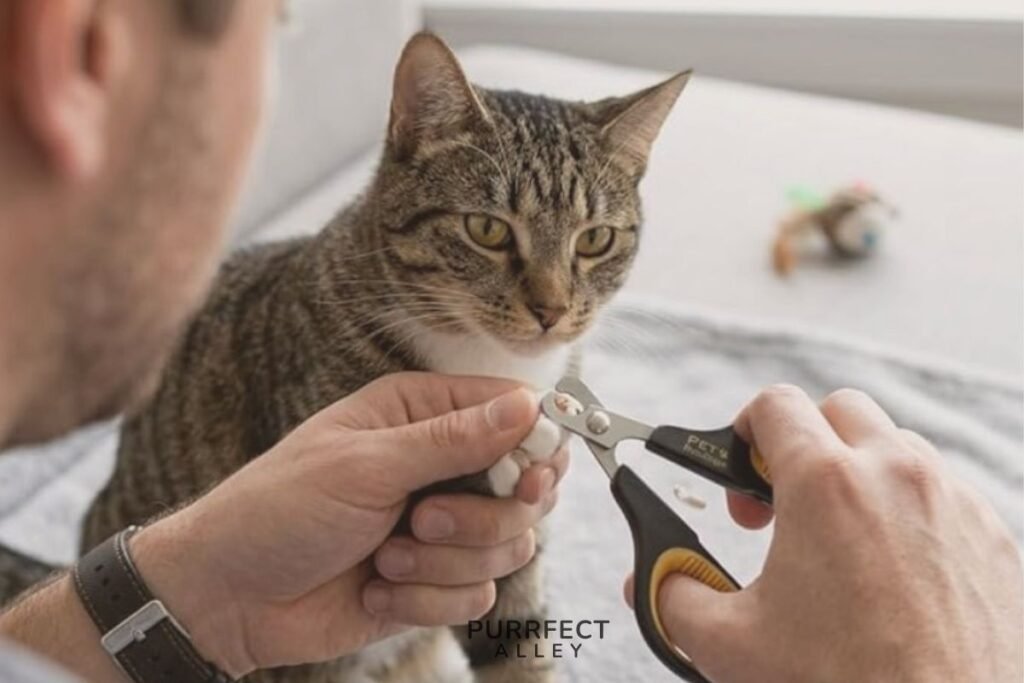
Nail clippers for gentle grooming practice
Once your cat is more comfortable with you, it helps to begin slow, positive nail care routines.
Why I recommend it as a cat mom:
Nail trims are one of those things that feel intimidating at first, but having the right tool makes the whole process less stressful. I like keeping a dedicated cat clipper on hand so I can do quick, calm trims instead of waiting until claws are extra sharp and everyone is tense. In the settled phase, your cat is usually more open to handling, so this is a great time to build that routine gently.

A puzzle feeder for enrichment and mental stimulation
Puzzle feeders are a great way to keep indoor cats busy and engaged, especially if they get the early-morning zoomies.
Why I recommend it as a cat mom:
I’m a big fan of puzzle feeders because they give cats something productive to do with all that curious, playful energy. Once a cat starts feeling at home, boredom can show up fast, and that’s when you may see more nighttime antics, demand meowing, or random chaos. A puzzle feeder adds mental enrichment and helps turn mealtime or treat time into an activity. For indoor cats especially, that extra stimulation can go a long way.
A Simple New Cat Shopping List
You do not need to buy everything at once. Most cats need safety, routine, and patience far more than they need a cart full of trendy gear.
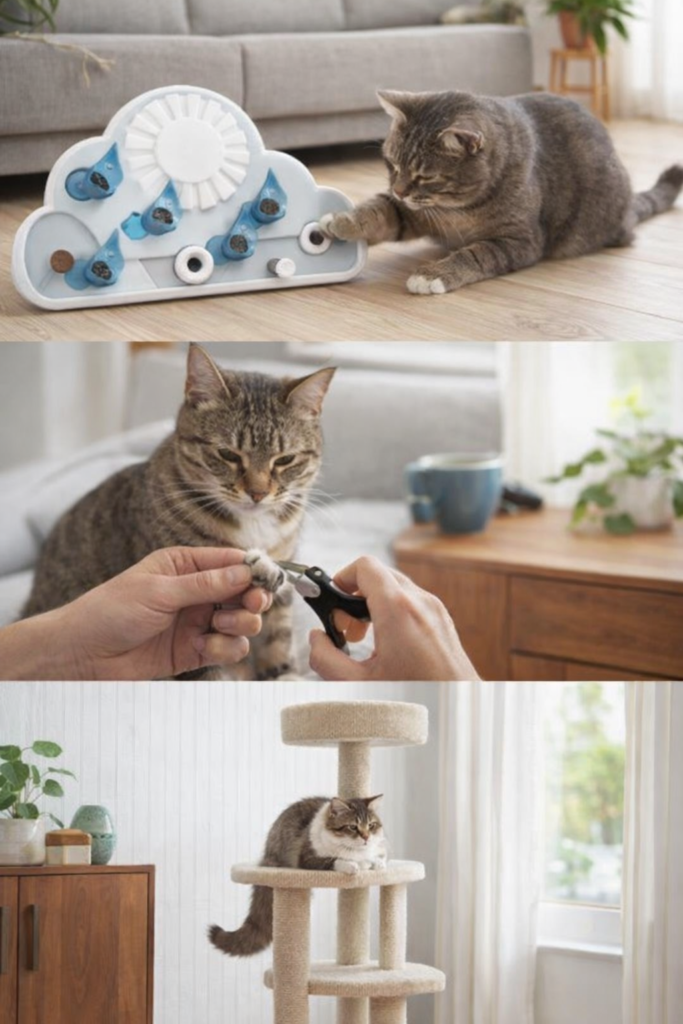
Days 1 to 3 essentials
Weeks 1 to 3 support
Month 3 and beyond
Common Questions First-Time Cat Moms Ask
FAQs

Yes. Hiding is one of the most common adjustment behaviors in newly adopted cats.
A small drop in appetite can happen during the first day or two, but if your cat refuses food for too long or seems unwell, contact your vet.
Some cats begin warming up within days, while others take weeks or months. The key is consistency, calm energy, and respecting boundaries.
It’s a helpful guideline, not a guarantee. Think of it as a way to set expectations, not a strict schedule.
A Final Word for New Cat Moms
If you’re in the early days and feeling discouraged, I want to gently remind you: a hiding cat is not a failed adoption story.
The 3-3-3 rule matters because it helps us slow down and see the transition from our cat’s point of view. Trust is built in the quiet moments—when you refill the food bowl, sit nearby without pressure, and let your cat come to you in her own time.
That’s the real heart of cat motherhood.
One day, the cat who hid under your dresser may be sleeping on your pillow, following you into the kitchen, and asking for attention with the tiniest chirp. And when that happens, it feels incredibly special because you gave her exactly what she needed most: patience, grace, and a safe place to land.
You’re not behind. You’re bonding.
🐾 Affiliate Disclosure: As an Amazon Associate, I earn from qualifying purchases. This helps keep our cat community going at no extra cost to you.