Why Does My Cat Scratch Furniture? Easy Fixes That Actually Work
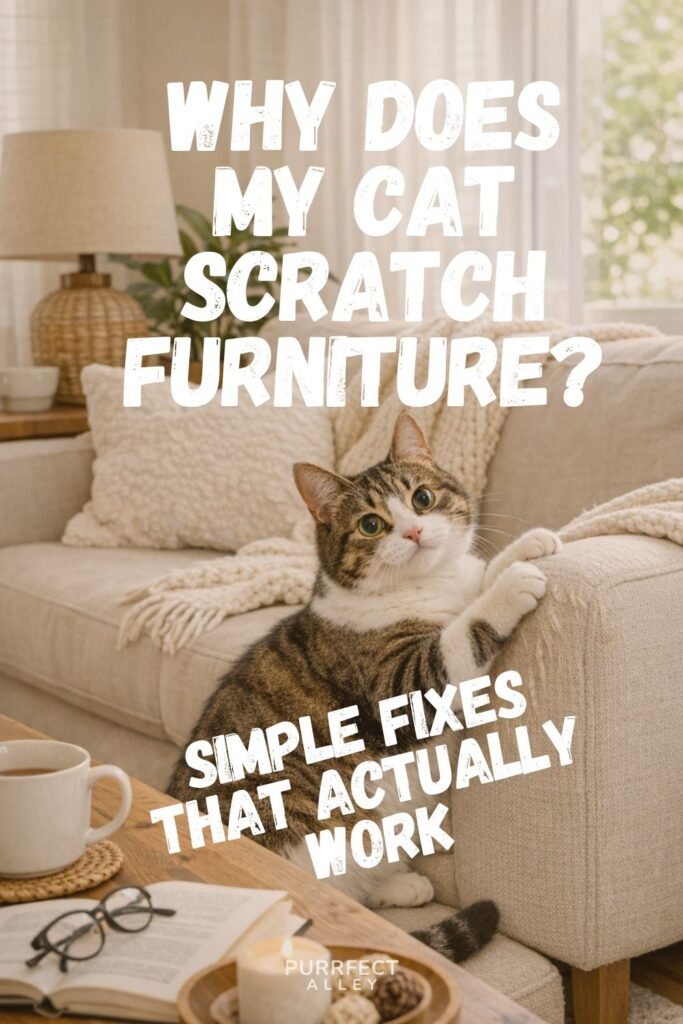
If you share your home with a cat, chances are you’ve had at least one moment where you turned around and caught them scratching the couch like it was their full-time job.
It usually happens fast. One second everything looks fine, and the next, your cat is hanging off the arm of your sofa with total confidence while you stand there wondering why your expensive furniture has suddenly become a scratching post.
It’s annoying, yes. But it’s also confusing — especially when you’ve already bought a scratcher, a cat tree, maybe even one of those cardboard lounge things, and your cat still chooses the furniture.
If you’ve been asking yourself, why does my cat scratch furniture, you’re not overreacting, and you’re definitely not alone. This is one of the most common cat behavior problems people deal with. The good news is that it usually has a very fixable cause.
In most cases, your cat is not being destructive on purpose. She’s not trying to upset you, and she’s not ignoring you out of spite. She’s scratching because scratching is a normal, healthy, hardwired cat behavior. The real issue is that your furniture happens to be more appealing than the scratching options you’ve offered so far.
Once you understand what your cat is getting out of scratching — and why the couch keeps winning — it becomes much easier to make a few simple changes that actually work.
In this guide, we’ll cover:
- why cats scratch furniture
- why scratching posts sometimes fail
- how to stop cat scratching furniture without punishment
- the best places to put scratchers
- the best products to protect your couch while training your cat
If your sofa is already looking a little tragic, don’t worry. There’s still hope.
Why Do Cats Scratch Furniture in the First Place?
Before you can fix the problem, it helps to understand something really important: scratching is not bad behavior. It’s a natural need.
When people search why does my cat scratch furniture, they’re usually hoping for one simple answer. But the truth is, cats scratch for several completely normal reasons.
Claw Maintenance
Cats scratch to remove the dead outer layer of their claws. This helps keep their nails healthy, sharp, and in good shape.
So even though it feels personal when they choose your couch, it really isn’t. In your cat’s mind, she’s just doing basic claw care.
Stretching and Exercise
Scratching also gives cats a deep stretch through the shoulders, legs, paws, and back.
That’s why a lot of cats scratch right after waking up. It helps them loosen their muscles and feel good physically.
Territory Marking
Cats have scent glands in their paws. When they scratch, they leave both a visible mark and a scent message behind.
It’s one of the ways they claim space and make their environment feel familiar and safe.
Emotional Release
Some cats scratch more when they’re excited, overstimulated, or stressed.
For example, your cat might run to the couch and scratch after seeing a bird out the window, after a burst of zoomies, or when everyone comes home at once. Scratching can help release that extra energy.
Why Does My Cat Scratch Furniture Instead of the Scratching Post?
This is the part that frustrates almost every cat owner.
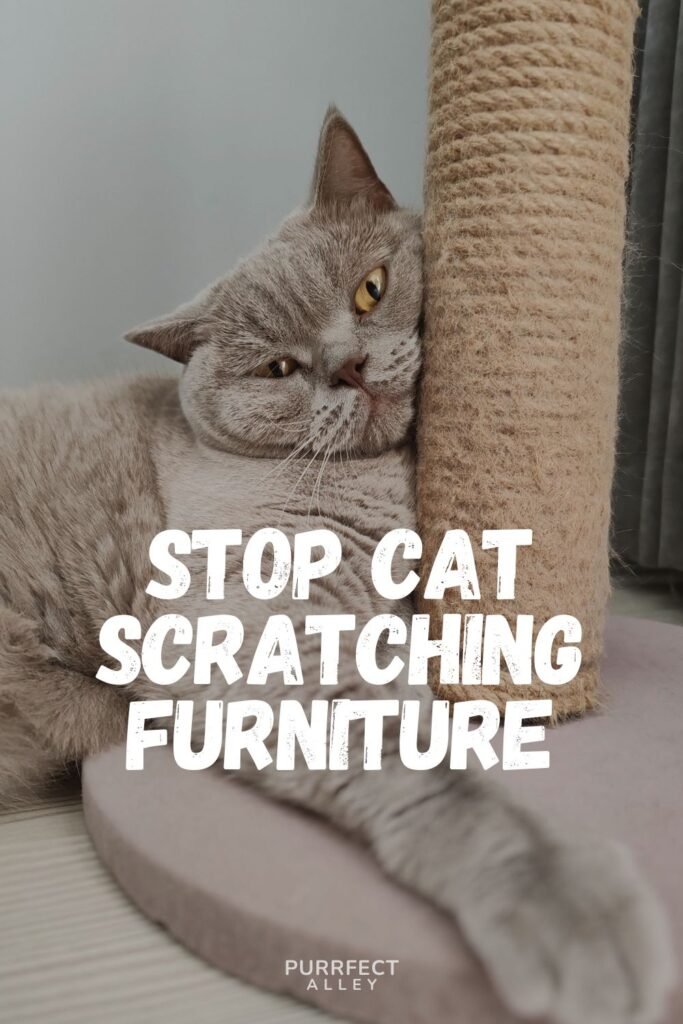
You bought the scratching post because you were trying to do the right thing. Maybe you even bought a nice one. And still, your cat walks right past it and heads straight for the couch.
So why does your cat scratch furniture instead of the scratching post?
Usually, it comes down to three things: stability, texture, and location.
Furniture Feels More Stable
A sofa doesn’t wobble. Many scratching posts do.
Cats want a surface they can really dig into and lean against. If a scratching post slides, shakes, or tips even a little, some cats will avoid it completely.
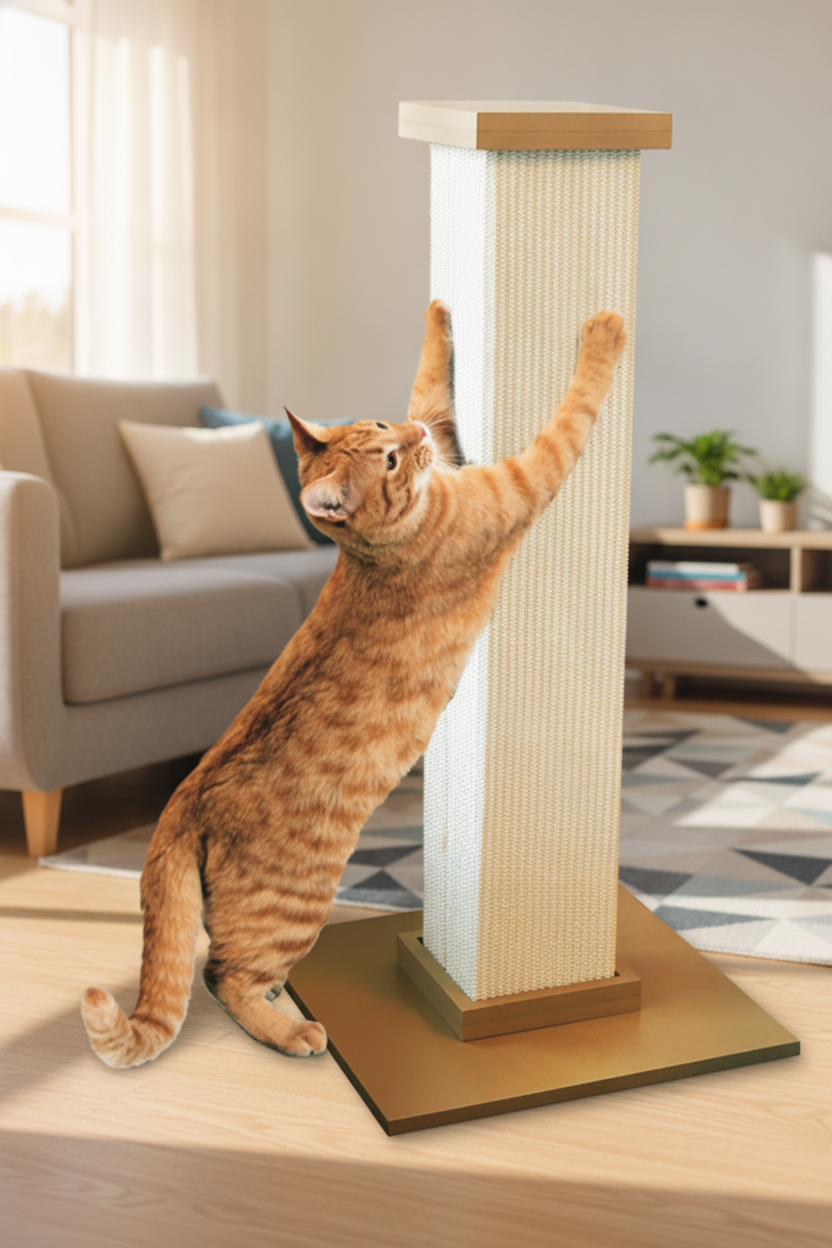
This is why a heavy-duty cat scratching post often works better than a lightweight budget option. Cats usually prefer something that feels as solid as the couch they’ve been scratching all along.
The Texture Feels Better
Cats can be surprisingly picky about texture.
Some love sisal rope. Others prefer cardboard. Some are obsessed with carpet, upholstery fabric, or rough woven material.
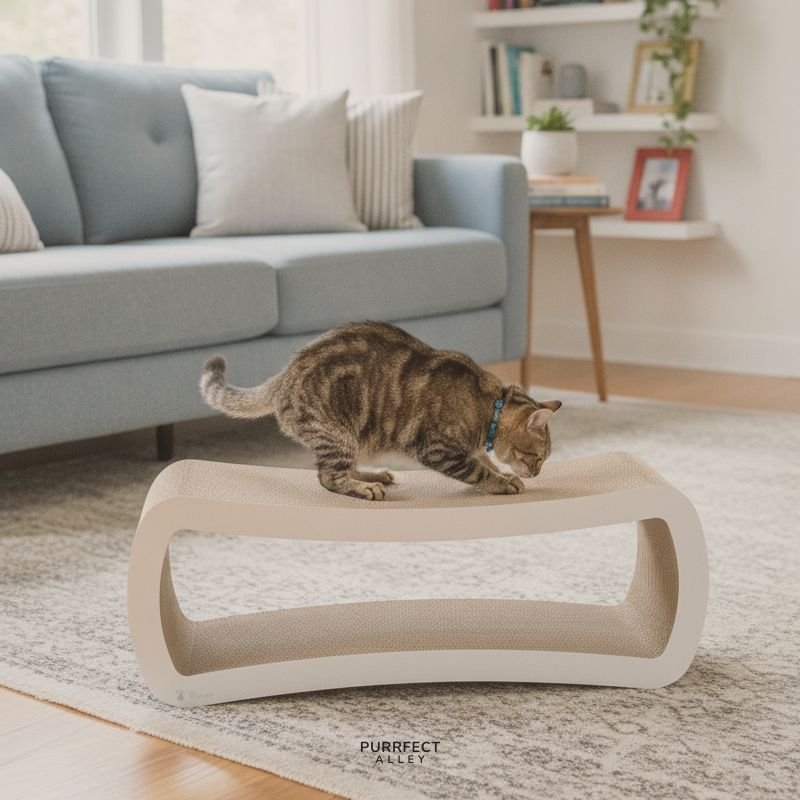
If your furniture feels better under your cat’s claws than the scratcher does, the furniture will win. For cats who ignore rope-covered posts, a cardboard cat scratcher lounge or flat sisal scratching mat may be a much better fit.
The Location Makes More Sense
Many people place scratching posts where they look neat, not where the cat actually wants them.
But cats usually scratch in important social areas — near the couch, in the living room, by doorways, or close to where they sleep. If the scratching post is hidden in a corner or spare room, your cat may have no interest in it.
How to Stop Cat Scratching Furniture Without Punishment
If you’re trying to figure out how to stop cat scratching furniture, the most important thing to know is this: punishment usually does not solve the problem.
Yelling, clapping, chasing your cat away, or spraying water might stop the scratching for a moment, but it does not teach your cat what to do instead. In many cases, it just creates stress. Some cats become anxious, while others simply learn to wait until you are out of the room before going right back to the couch.
A better approach is to work with your cat’s instincts instead of against them. That means giving your cat an appropriate place to scratch, making the furniture less appealing for a while, and rewarding the behavior you want to see more often.
Here’s how to do that in a way that is realistic, effective, and much kinder for both of you.
Step 1: Put a Scratcher Right Next to the Problem Area
If your cat scratches the arm of the couch, the best place for a scratching post is right next to that couch arm.
Not in the hallway. Not across the room. Not tucked into a corner where it looks nicer.
Right next to the spot your cat already loves.
This works because cats usually scratch in places that feel important to them. If your cat keeps returning to one piece of furniture, it is usually because that spot feels satisfying, familiar, and conveniently placed. By putting a scratching surface beside it, you make the better choice easy and obvious.
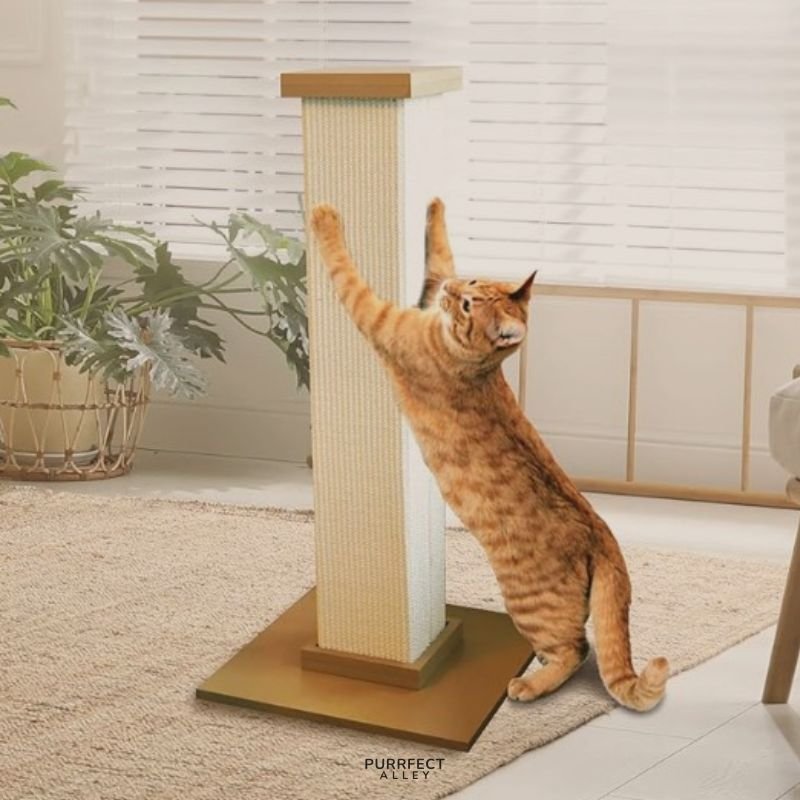
If your cat likes to stretch up high, a tall cat scratching post for indoor cats is usually the best fit. A taller post gives your cat room for a full-body stretch, and a sturdy base matters more than people realize. Many cats ignore scratching posts simply because they wobble too much. A solid post feels safer and more satisfying, which makes it much more likely your cat will actually use it.
If your cat targets the couch arm specifically, a couch arm scratching protector for cats can also help. Some of these products protect the furniture while also giving your cat a more appropriate texture to scratch in that same spot. That can be especially useful when your cat is very attached to one exact area.
And if your cat prefers scratching low surfaces like rugs, carpet, or the bottom edge of furniture, a cardboard cat scratcher lounge may work better than an upright post.
Step 2: Make the Furniture Less Appealing
While your cat is learning a new habit, it helps to make the furniture less rewarding to scratch.
This is where temporary deterrents can make a big difference. The goal is not to scare your cat. It is simply to change the texture or feel of the furniture enough that your cat starts to lose interest in it.
You can try:
- double-sided tape for cats
- clear couch protectors for cats
- couch corner protectors for cats scratching
- a throw blanket over the scratched area
- a couch-mounted cat scratch mat
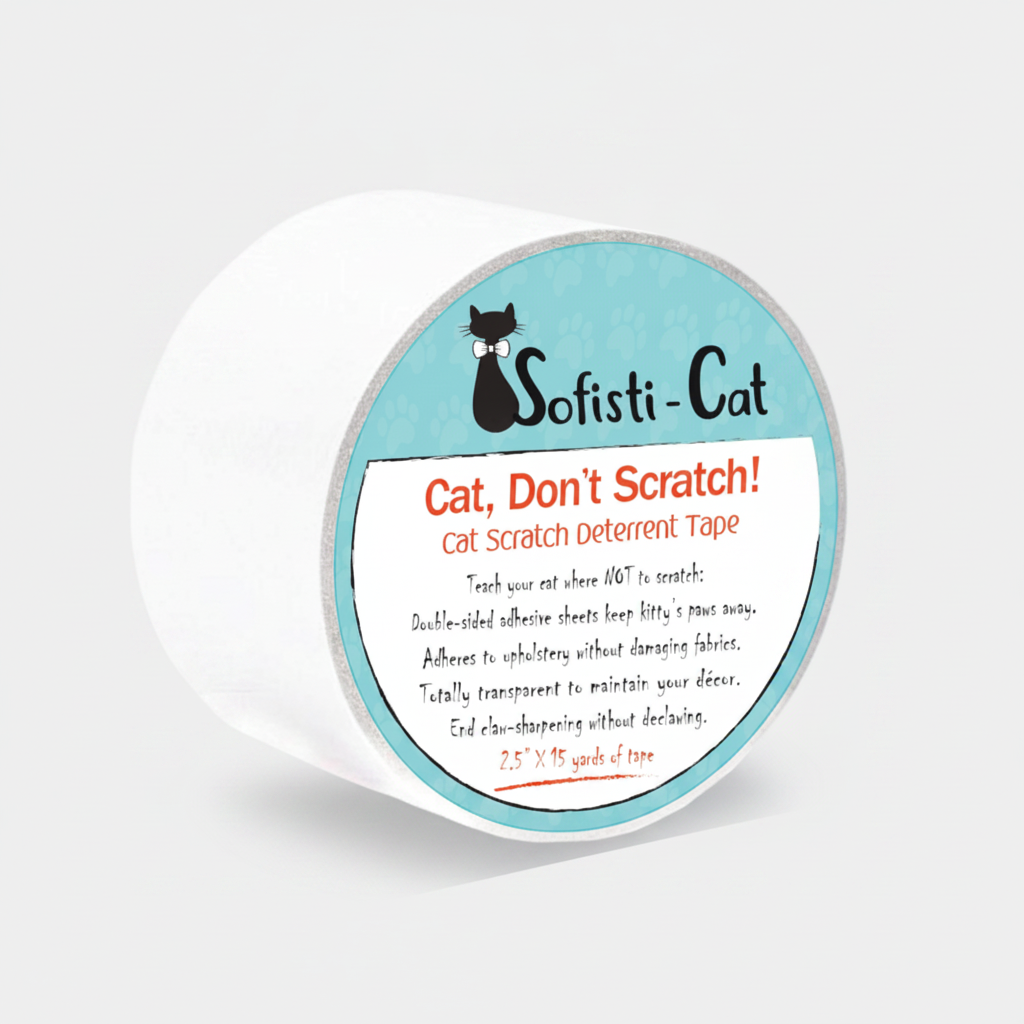
A product like double-sided tape for cats works well because most cats dislike the sticky feeling on their paws. It is a simple way to make the couch less appealing without creating fear. This works especially well when there is a scratching post right beside the furniture, because your cat quickly learns that one surface feels unpleasant and the other feels much better.
Clear couch protectors for cats and cat couch corner guards are also useful if your cat always scratches the same few spots. They protect the fabric while you work on redirecting the behavior, and many of them are much less noticeable than bulky covers or blankets.
These tools are not meant to be forever. Think of them as part of the training period — something that helps break the old habit while the new one is taking shape.
Step 3: Reward the Scratcher Immediately
When your cat uses the scratching post, reward her right away.
That reward can be simple:
- a small treat
- gentle praise
- affection, if she enjoys it
- a quick play session

If you’re using treats for training, a small bag of soft cat training treats can make this step easier. The goal is not to overfeed your cat — just to make the scratching post feel more rewarding than the couch.
Timing matters here. The closer the reward is to the scratching behavior, the easier it is for your cat to connect the two. Over time, that helps build a strong positive association with the scratching surface you want her to use.
Step 4: Use Catnip or Silvervine if It Helps
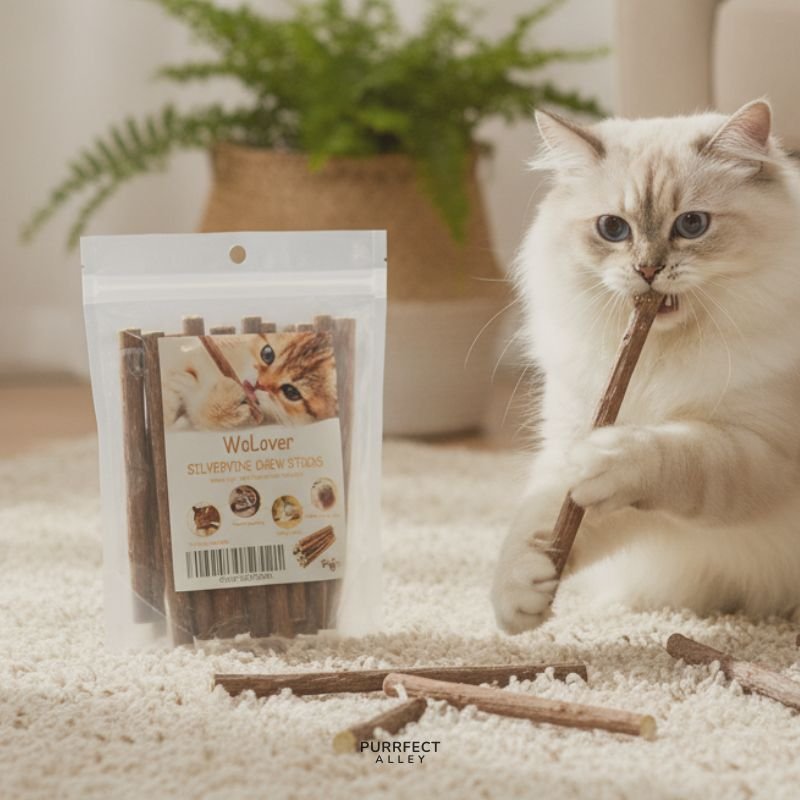
Some cats need a little extra encouragement to notice a new scratching surface, and that is where organic catnip for cats or silvervine sticks for cats can help.
If your cat responds to catnip, sprinkling a little on a new scratching post or scratch pad can make it much more interesting. It helps create curiosity and can encourage your cat to interact with the scratcher sooner.
If your cat does not react to catnip, do not worry. Many cats who ignore catnip respond really well to silvervine powder for cats or silvervine sticks for cats instead. It can be a great alternative, especially if you have tried catnip before and gotten absolutely no reaction.
The reason to use these on the scratcher rather than near the furniture is simple: you want your cat to associate excitement and fun with the approved scratching surface, not with the couch.
Step 5: Keep Nails Trimmed
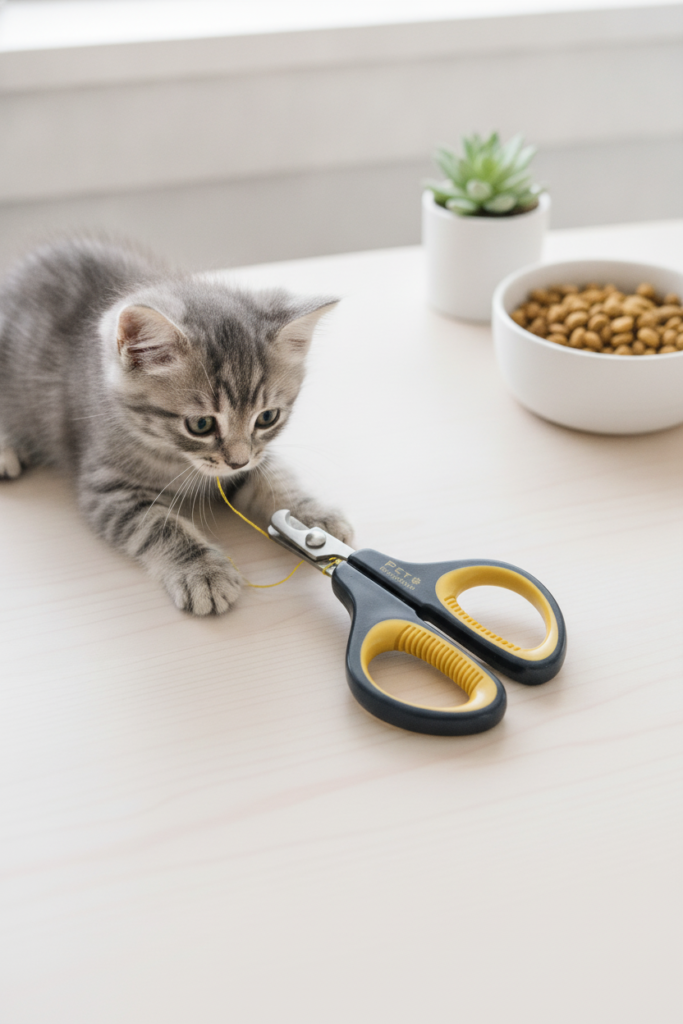
Trimming your cat’s nails will not stop the scratching instinct, but it can reduce the amount of damage while you work on changing the behavior.
That makes nail care a helpful support tool, even though it is not the main solution.
A good pair of cat nail clippers for indoor cats can make regular trims easier and safer, especially if your cat tolerates handling reasonably well. If your cat is nervous about clippers, some owners prefer a quiet pet nail grinder for cats because it can smooth the nail more gradually.
Either way, shorter nails usually mean less snagging, less fabric damage, and fewer deep pulls in upholstery.
If you are not sure how to trim your cat’s nails safely, ask your vet or groomer to show you the basics. Once you get comfortable with it, it becomes much less intimidating.
Best Place to Put a Cat Scratching Post

If your cat keeps ignoring the scratcher, placement may be the real problem.
The best place to put a cat scratching post is wherever your cat already wants to scratch.
Use High-Traffic Areas
Cats often scratch in places where people spend time or move through often, including:
- living rooms
- hallways
- bedroom doors
- entryways
- stair landings
Put Scratchers Near Sleeping Areas
Many cats scratch right after waking up, so putting a scratching surface near a favorite nap spot can be very effective.
A small cat scratcher for bedroom corners or a cat scratching pad for indoor cats can work well here because it gives your cat an easy outlet right when the urge hits.
Place Scratchers Next to Target Furniture
If your cat scratches the sofa, put the scratcher right beside the sofa.
If she scratches the hallway carpet, place a horizontal scratcher there.
This may not be your dream home decor moment, but it works. A cat scratching post for the living room or a cardboard scratch pad for cats can be easier to fit into these spaces without making the room feel cluttered.
Try Sunny Spots and Windows
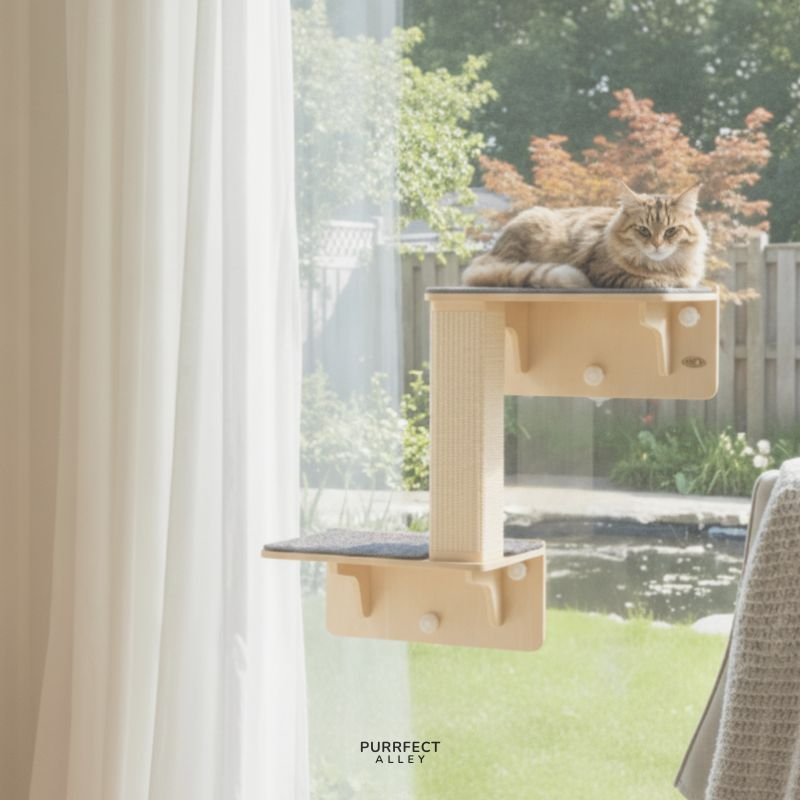
Some cats are more likely to use a scratcher if it’s in a warm, comfortable place they already enjoy. A window-side cat scratching post can be especially appealing for cats who love lounging in the sun.
Vertical vs Horizontal Scratchers: Which One Does Your Cat Prefer?
One of the biggest reasons cats ignore scratching posts is surprisingly simple: the scratcher does not match the way they naturally like to scratch.
A lot of cat owners buy one standard scratching post and assume any cat should use it. But cats have preferences, just like people do. Some cats love stretching up tall and digging into a vertical surface. Others want to crouch low and scratch something flat on the ground.
If you choose the wrong style, even a high-quality scratcher can end up collecting dust while your couch keeps taking the hit.
That is why it helps to watch your cat closely before buying anything new. The way your cat scratches now usually tells you exactly what kind of scratcher she is most likely to use.
Vertical Scratchers
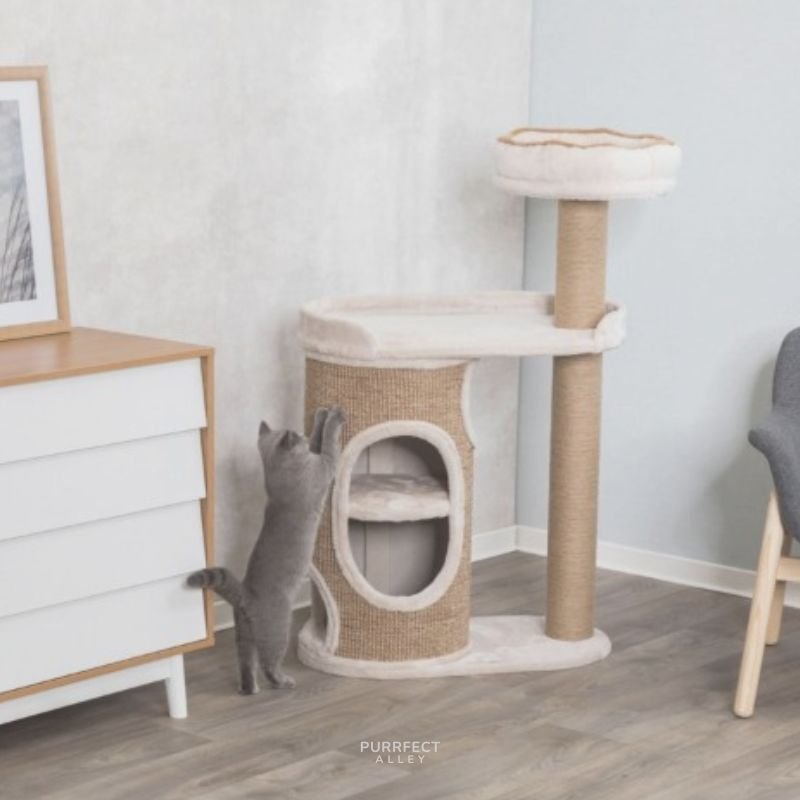
Your cat may prefer a vertical scratcher if she:
- stretches high on the couch arm
- scratches door frames
- reaches upward while scratching
- likes tall surfaces
If that sounds familiar, a vertical scratching option is usually the best place to start.
Cats who scratch vertically often want that long, satisfying full-body stretch. They like to stand tall, extend their front legs, and really pull downward with their claws. That is one reason furniture gets targeted so often — couch arms, chair sides, and door frames are all stable, upright surfaces that naturally support this kind of scratching.
A vertical scratcher should be sturdy, tall, and stable enough for a full-body stretch.
Why I Recommend an Extra Tall Cat Scratching Post
If your cat is a vertical scratcher, an extra tall cat scratching post is often one of the best investments you can make.
The reason is simple: it gives your cat what most basic scratching posts do not. A taller post allows for a natural, satisfying stretch from shoulders to paws, which is exactly what many cats are looking for when they scratch furniture. This is especially important for larger cats, long-bodied cats, or very active cats who like to really lean into their scratching.
I recommend extra tall posts over smaller budget posts because many standard posts are simply too short to be useful. A cat may touch them once or twice, but if she cannot stretch properly, she may not stick with it
Why a Wall-Mounted Cat Scratcher Can Work Even Better for Some Cats
Some cats love vertical scratching but still ignore freestanding posts. In that case, a wall-mounted cat scratcher can be a really smart option.
I often recommend wall-mounted scratchers for cats who scratch door frames, walls, or specific vertical spots in the home. These cats sometimes prefer a surface that feels completely fixed and solid.
Horizontal Scratchers
Your cat may prefer a horizontal scratcher if she:
- scratches rugs or carpet
- crouches low while scratching
- likes flat surfaces
- ignores upright posts
If that sounds more like your cat, a horizontal scratching surface may be the missing piece.
In that case, a cardboard cat scratcher or flat sisal scratching mat may work much better.
Why I Recommend a Cardboard Cat Scratcher
A cardboard cat scratcher is often one of the easiest and most effective options for cats who prefer horizontal scratching.
The biggest reason I recommend cardboard is that many cats genuinely love the texture. It has just enough give to feel satisfying under their claws, and it often mimics the kind of resistance they enjoy from carpet or soft furniture surfaces.
Cardboard scratchers are also great because they are easy to place exactly where your cat already likes to scratch
Why a Flat Sisal Scratching Mat Is Worth Trying
If your cat likes horizontal scratching but destroys rougher surfaces like rugs, carpet, or woven furniture, a flat sisal scratching mat for cats can be a really good option.
I recommend sisal mats for cats who seem to want a firmer, rougher texture than cardboard provides. Sisal has a tougher feel, which some cats love because it gives them more resistance when they scratch.
How Many Scratching Posts Does One Cat Need?
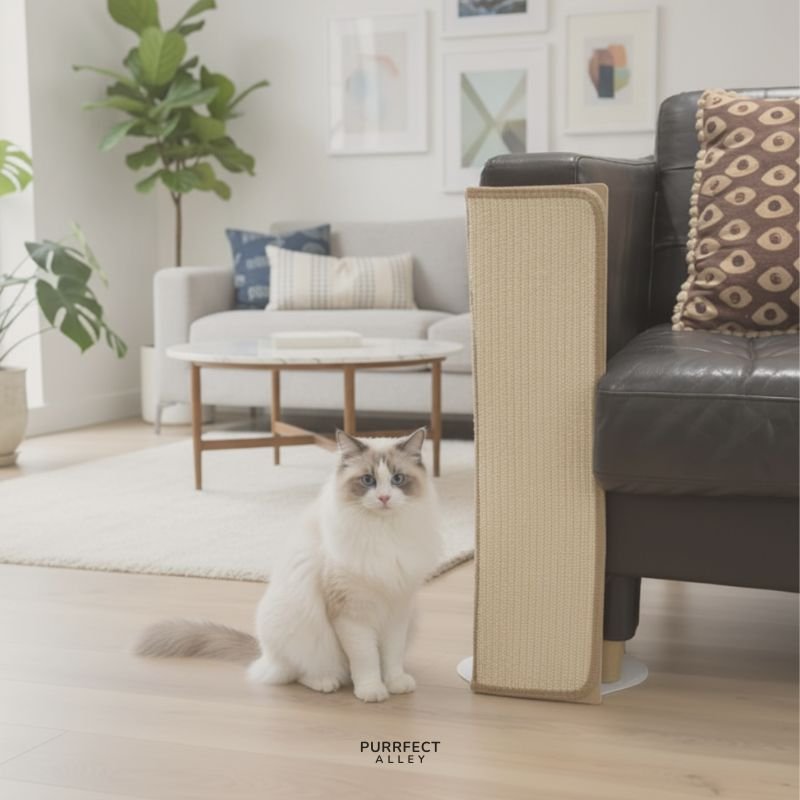
A simple rule to follow is the N+1 rule:
Number of cats + 1 = minimum number of scratching areas
So if you have:
- 1 cat = 2 scratching areas
- 2 cats = 3 scratching areas
- 3 cats = 4 scratching areas
This gives your cat more chances to make the right choice and helps prevent one scratcher from becoming easy to ignore.
Try placing them in different areas of your home instead of keeping them all in one spot. A mix of an extra tall scratching post, a cardboard scratch pad, and a furniture-mounted cat scratcher often works better than buying the same type over and over.
Best Types of Cat Scratchers for Cats That Scratch Furniture
If your cat keeps choosing furniture, she may need a scratcher that better matches what she likes. Here are the types I’d focus on first.
Tall Sisal Scratching Posts
These are great for cats who love a full-body stretch and want a sturdy upright surface. Look for a heavy-duty sisal scratching post or an extra tall scratching post for large cats if your cat really leans into scratching.
Furniture-Mounted Scratchers
These are especially helpful if your cat is obsessed with one couch arm or one corner of the sofa. A couch arm cat scratcher or sofa protector scratch mat can protect the fabric while giving your cat a better outlet in the same spot.
Trees With Scratching Surfaces
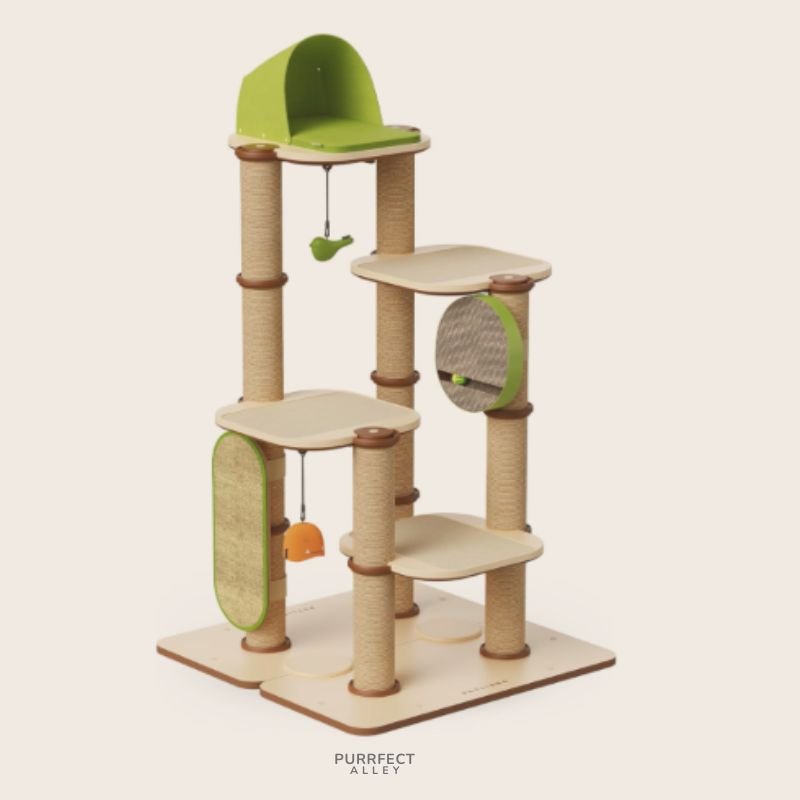
A cat tree can be a great all-in-one option for cats who love climbing, lounging, and scratching. A cat tree with sisal posts or multi-level cat tower with scratch surfaces can become part of your cat’s daily routine, which often makes it more useful than a scratcher they only pass occasionally.
Cardboard Scratchers
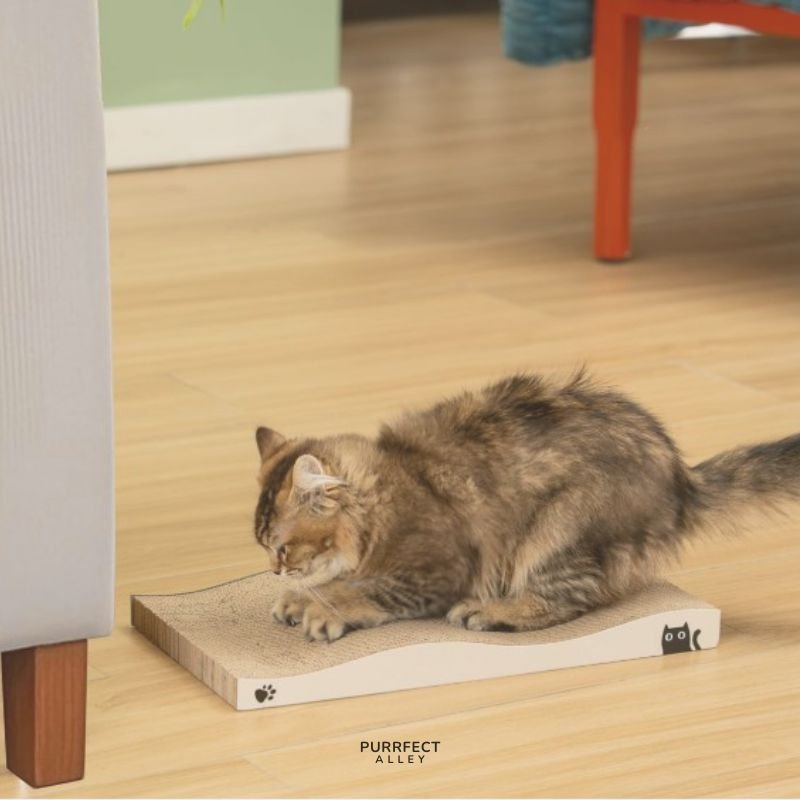
These are affordable, easy to move, and very popular with cats who like horizontal scratching. A cardboard wave scratcher for cats or reversible cardboard scratch pad can be a good low-risk option if you are still testing preferences.
Wall-Mounted Scratchers
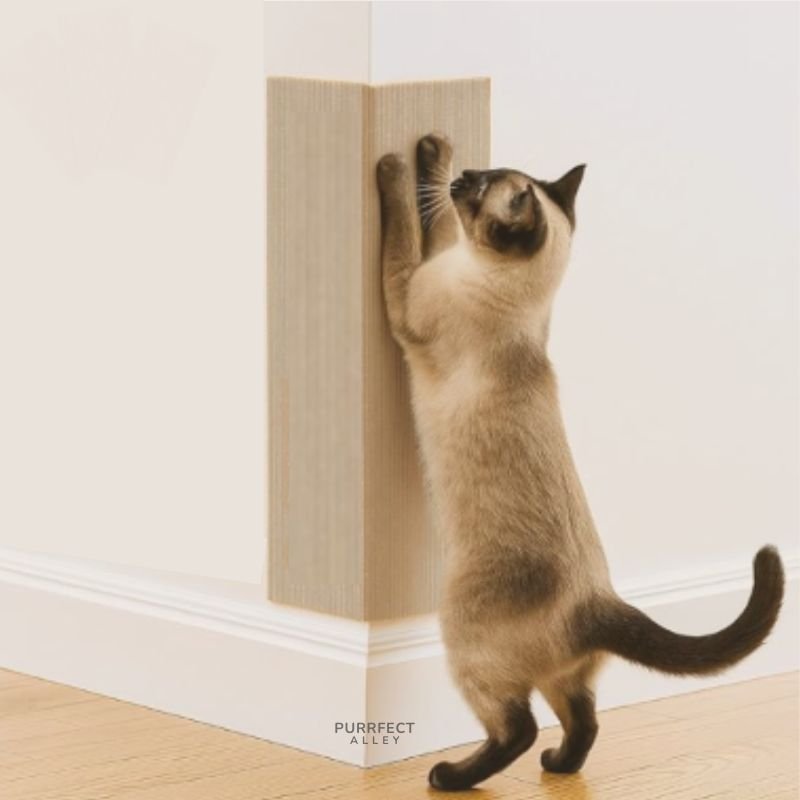
These can work well for cats who like scratching vertical surfaces but ignore freestanding posts. A wall-mounted scratching pad for cats is also useful if you are short on floor space.
Common Mistakes That Make Furniture Scratching Worse
Sometimes the problem continues because of a few very common mistakes.
Mistake #1: Using Punishment
Punishment may stop the scratching in the moment, but it does not remove your cat’s need to scratch.
Mistake #2: Buying a Flimsy Scratcher
If the post tips, slides, or feels too short, your cat may reject it right away.
Mistake #3: Hiding the Scratcher
If the scratching post is far away from the place your cat already likes to scratch, it may never become part of her routine.
Mistake #4: Offering Only One Texture
Cats have preferences. If your cat hates sisal, buying more sisal scratchers probably won’t solve the problem. You may need to try a cardboard cat scratcher, sisal scratching mat, or couch-mounted cat scratcher instead.
Mistake #5: Giving Up Too Quickly
Some cats switch fast. Others take time. The key is consistency.
Mistake #6: Declawing
Declawing is not a behavior solution. It can lead to pain, stress, and long-term physical and behavioral problems..
What to Do If Your Cat Ignores Every Scratcher
If your cat ignores every scratcher you buy, don’t panic. It usually means you haven’t found the right match yet.
Try Different Materials
Test a few options, such as:
- cardboard
- sisal
- carpet
- felt
- jute
Your cat may have a very clear preference. Sometimes switching from a rope post to a cardboard cat scratcher lounge or flat sisal mat for cats makes all the difference.
Make It More Interesting
Try adding:
- catnip for scratching posts
- silvervine sticks for cats
- treats nearby
- praise after use
- play sessions near the scratcher
Sometimes your cat just needs a reason to notice it.
Put the Scratcher in the Exact Spot
If your cat scratches the same corner of the couch every day, put the scratcher there first.
Try Different Angles
Some cats want a tall upright post. Others want a flat pad. Some love a slight angle.
A slanted cat scratcher can be a good middle-ground option if your cat seems to want something between vertical and horizontal.
Final Thoughts: Why Does My Cat Scratch Furniture?
If you’ve made it this far, here’s the biggest takeaway: your cat is not trying to make you miserable. She’s doing something that feels natural, necessary, and good to her.
That doesn’t make it any less frustrating when your couch is paying the price, of course. But it does mean the solution is not about punishment or “stopping” the behavior completely. It’s about working with your cat’s instincts instead of against them.
When you understand why your cat scratches furniture, the whole situation starts to make a lot more sense. Your cat wants a scratching surface that feels sturdy, satisfying, and conveniently placed in an area that matters to her. If the couch checks all those boxes and the scratching post doesn’t, the couch is going to keep winning.
The good news is that this problem is usually very manageable with a few smart changes:
- give your cat a scratcher she actually likes
- put it exactly where she already wants to scratch
- protect the furniture while the new habit forms
- reward the right behavior consistently
- be patient while your cat figures it out
Sometimes the fix is as simple as moving a scratcher six feet closer to the sofa. Sometimes it takes trying a different texture or shape. And sometimes it takes a little trial and error before you land on the setup your cat loves.
But once you do, the difference can be huge.
So if you’ve been stressed, annoyed, or quietly mourning the corners of your furniture, take a breath. You’re not failing, your cat isn’t bad, and this is one of those pet problems that really can get better with the right approach.
And hopefully, from here on out, your couch gets a break.
FAQs

No. Punishment may interrupt the behavior temporarily, but it does not remove your cat’s instinct to scratch. Redirection and positive reinforcement work much better long term.
Usually no. Scratching is a lifelong behavior, and most cats need proper scratching outlets throughout their lives.
That depends on your cat’s scratching style. Cats that scratch couch arms often do well with a tall, sturdy vertical post or a couch-mounted scratcher.
You can use double-sided tape, clear furniture guards, couch protectors, blankets, or corner scratch mats while encouraging your cat to use a nearby scratching surface.
No. Many essential oils can be toxic to cats. It’s safer to use physical deterrents and cat-friendly training methods.
A good minimum is two scratching areas for one cat, ideally in different styles or textures.
🐾 Affiliate Disclosure: As an Amazon Associate, I earn from qualifying purchases. This helps keep our cat community going at no extra cost to you.